
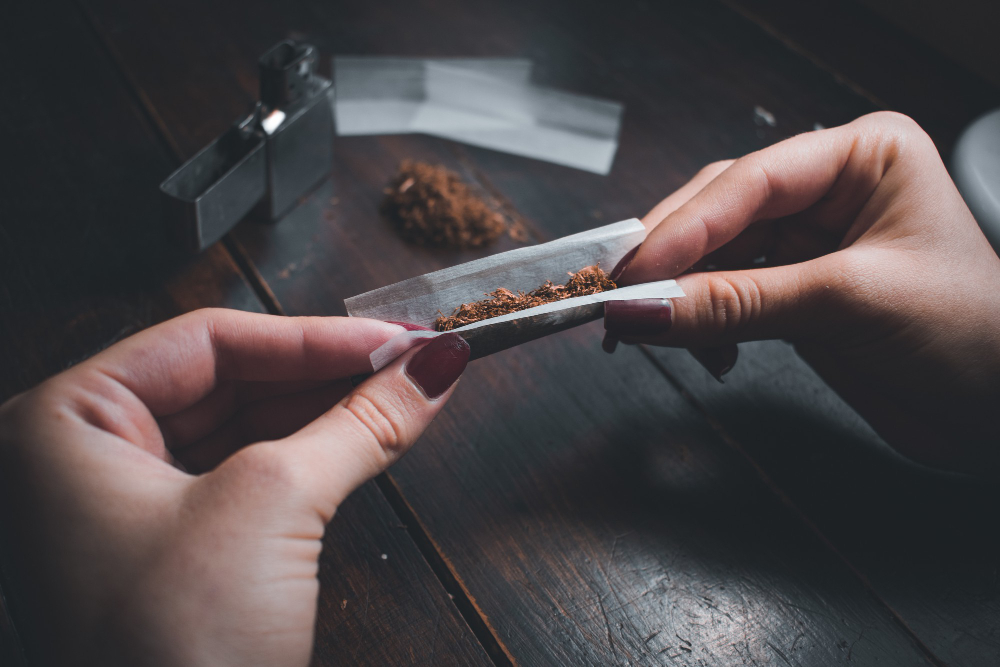
Beyond the Blank Canvas of Custom Rolling Papers
For decades, the custom rolling paper was a humble, anonymous commodity. A blank, functional wrapper. Today, it has transformed into one of the most powerful and personal branding tools in the modern market. From global brands and musicians to artists and private events, custom-branded rolling papers are a tangible, interactive statement. But this evolution begs a critical question: how exactly do you print a complex, full-color logo onto an ultra-thin, delicate, and combustible product that is intended to be inhaled? The answer is a fascinating and deeply technical journey that sits at the intersection of material science, specialized printing technology, and stringent, food-grade quality control. This is not a simple desktop printing job. It's a high-volume industrial process where safety is not just a feature, but the entire foundation. In this comprehensive guide, we will peel back the curtain, layer by layer, on the entire manufacturing process. We'll explore the molecular science of the paper fibers, deconstruct the 'food-grade' inks, and map the precise mechanical engineering that turns a massive, printed roll into a perfect, pop-up booklet. Get ready to go from concept to creation.
Part 1: The Foundation – Deconstructing the Paper Itself
Before a single drop of ink is considered, the base material—the paper—must be perfected. This is not 'paper' in the way you think of a book or a receipt. It is a highly engineered material, designed and milled for three specific qualities: burn rate, taste, and safety.
The Great Fiber Debate: Pulp, Hemp, and Rice
The source of the paper's fiber dictates its core characteristics, including color, strength, and burn. Each has its own devoted following and manufacturing considerations.
Classic Wood Pulp (Bleached vs. Unbleached)
This is the traditional rolling paper material. 'Bleached' white papers are the most common, offering a pure white canvas that makes custom-printed colors 'pop' vibrantly. The bleaching process is not done with household bleach; modern, high-quality manufacturers use an Elemental Chlorine-Free (ECF) process, typically with chlorine dioxide, which is far safer for the environment. 'Unbleached' wood pulp papers, which have a light brown, natural appearance, are increasingly popular as they are perceived as more 'natural' and have a slightly more robust, paper-forward taste.
Hemp: The Sustainable Champion
Hemp is a powerhouse of sustainability. It grows incredibly fast, requires a fraction of the water of trees, and has strong, durable fibers. As a rolling paper, it's prized for its slow, even burn and minimal, slightly earthy taste that many users feel complements the material they are smoking. Its natural, off-white color provides a rustic-looking canvas for custom designs.
Rice Paper: The Artisan's Choice
Often made from rice straw, rice paper is the thinnest of all. It is virtually tasteless, burns incredibly slowly, and produces almost zero ash. This makes it a favorite for purists. However, its delicate, almost translucent nature makes it more challenging to print on without compromising its structure, and it can be difficult for beginners to roll.
The Unseen Element: Porosity and Burn Rate
This is where the true science comes in. 'Porosity' is a measure of how much air can pass through the paper. This single property is the main factor that controls the burn rate. Manufacturers control porosity by adding natural, food-grade fillers, most commonly calcium carbonate (chalk). More filler means lower porosity, which means a slower, more even burn. Less filler means higher porosity, a faster burn, and a paper that's more likely to go out if not actively smoked. For custom printing, the porosity must be perfectly balanced. Too porous, and the inks might 'bleed' or run. Not porous enough, and the paper won't burn correctly. This is a proprietary formula that manufacturers guard closely.
The Adhesive: What is 'Natural Gum Arabic'?
The sticky strip on every rolling paper is almost universally made from Natural Gum Arabic . This isn't a synthetic glue. It is a 100% natural, food-safe, and vegan product harvested from the sap of the Acacia tree in Africa. It is the undisputed industry standard for several reasons: 1. Completely Tasteless: It imparts zero flavor, ensuring a pure experience. 2. Highly Effective: It provides a strong, reliable seal with minimal moisture. 3. Proven Safe: It is food-grade and has been used in food products (like hard candies and marshmallows) for centuries. The application of this gum is a high-precision process. A machine applies a micro-thin, perfectly consistent line of the gum solution to the edge of the paper. Too much, and the paper will curl as it dries. Too little, and it won't stick. This step alone is a masterpiece of quality control.
Part 2: From Digital File to Physical Print – The Core Process
With our foundation materials chosen, we now move to the artwork. This is a multi-stage process that adapts a digital design for the unique, challenging medium of ultra-thin paper.
The Pre-Press Phase: Where Art Meets Manufacturing
A client's beautiful digital logo cannot simply be 'sent to the printer.' It must be technically deconstructed and rebuilt for the manufacturing press. * Design Review: A 'pre-flight' technician reviews the file. Is it a vector file (infinitely scalable, preferred) or a high-resolution raster file? Are the colors defined in a Pantone (PMS) spot color system (best for simple, exact logo colors) or in CMYK (for full-color photos)? * Color Separation: The technician separates the design into its core color components. Each color will get its own custom-made 'printing plate.' * Step-and-Repeat: The single design is duplicated thousands of times in a precise grid pattern. This pattern, or 'layout,' is what will be etched onto the printing plates. This ensures that when the massive roll of paper is printed, it's covered in thousands of copies of the logo, all perfectly aligned for the cutting stage later.
The Inks: The Non-Negotiable Heart of Safety
This is the most critical component for safety and regulation. The inks used for custom rolling papers are *not* standard printing inks. They must be, without exception, food-grade and non-toxic. Standard inks, like those in your desk printer or in magazines, contain mineral oils, heavy metals, and toxic solvents that are dangerous if burned and inhaled. Food-grade inks are completely different. * Base: They use a 'vehicle' or base made from natural, edible materials, typically vegetable oils like soy, rice bran, or palm oil. * Pigments: The colors themselves are also food-grade, FDA-approved pigments. These are the same pigments used in food coloring, cosmetics, and pharmaceuticals. The trade-off is that the 'color gamut' (the range of available colors) is more limited than with standard inks, and the colors are often less 'shiny' or 'plasticky.' But this is a non-negotiable compromise. Any manufacturer not using 100% food-grade inks is creating a dangerous product. Reputable suppliers will always provide a Certificate of Analysis (CoA) to prove their inks are tested and safe.
The Printing Method: Offset vs. Gravure
The validated design and the safe inks are now brought to the industrial press. The paper is fed into these house-sized machines from massive rolls called 'bobbins,' which can weigh hundreds of pounds.
Method 1: Offset Lithography
This is the most common method for custom rolling papers. Think of it as a highly sophisticated stamping process. The inked image is not transferred directly from the metal printing plate to the paper. Instead, it follows a path: 1. The printing plate is inked. 2. The plate 'offsets' the ink image onto a rubber 'blanket' (a soft roller). 3. The rubber blanket then gently presses the ink image onto the rolling paper. This indirect transfer is ideal for the delicate paper, as the soft rubber blanket conforms to its surface without tearing it. It's cost-effective for medium runs (5,000-50,000 booklets) and is perfect for reproducing sharp logos and text.
Method 2: Rotogravure (Gravure)
This method is for the absolute highest quality and volume. Instead of a plate, it uses a massive, solid copper cylinder that has the entire design *engraved* into it as thousands of microscopic 'cells.' This cylinder rotates in a bath of ink, filling the cells. A 'doctor blade' scrapes the excess ink off the smooth surface, and the paper is then pressed directly against the cylinder, pulling the ink out of the cells. * Pros: Unmatched quality for full-color photographic designs and subtle gradients. * Cons: Extremely high setup cost. Engraving the custom cylinder can cost tens of thousands of dollars, making this method economical only for massive runs (hundreds of thousands of booklets).
The Art of the Watermark
A watermark is the ultimate sign of premium quality and security. There are two types: * True Watermark: This is the most authentic. It is *not* printed. It is created at the paper mill *before* the paper is even dry. A special tool called a 'dandy roll,' which has the logo or pattern on it, gently presses into the wet paper pulp, displacing the fibers. When the paper dries, that pattern is permanently embedded as a more translucent area. This is how brands create their signature anti-counterfeiting patterns. * Pseudo-Watermark: This is a clever printing technique. A special, transparent, oil-based 'ink' is applied during the printing process. It creates a translucent mark that *looks* like a watermark and can help control the burn rate, but it is an *additive* process, not a structural one.
Part 3: Assembly & Finishing – Creating the Final Product
We now have a giant, printed, and gummed roll of paper. The final steps involve turning this massive bobbin into the familiar booklets you see on a shelf.
Slitting, Cutting, and Interleaving
The large printed bobbin is first loaded onto a 'slitter-rewinder.' This machine uses a series of razor-sharp circular blades to slice the wide roll into dozens of smaller, narrow rolls (called 'slits'). Each of these small rolls is the width of a single rolling paper's *length* (e.g., 78mm or 110mm). These smaller rolls are then fed into the true marvel of the factory: the interleaving machine . This machine performs a process that seems like magic. It pulls paper from two (or more) rolls at once, cuts them to the correct *height* (e.g., 44mm), and in the same motion, folds and weaves them together. Think of it like perfectly shuffling two decks of cards, but at hundreds of units per minute. This 'interleaving' or 'interweaving' is what creates the 'pop-up' functionality. When you pull one paper out, the fold is 'hooked' to the next paper, pulling it out and readying it for the user.
The Booklet: Printing and Assembly
In parallel, the custom-printed *covers* for the booklets are being produced. This is a separate, more standard printing process on cardboard stock. This is where brands can get really creative with full-color printing, metallic foil stamping, embossing (raised designs), or spot UV (shiny) coatings. The flat, printed-and-scored covers are brought to the assembly line. The small, counted stacks of interleaved papers (e.g., a stack of 32 papers) are precisely placed onto the cover, which is then folded around the stack and sealed, either with a tiny dab of glue or a staple. Finally, the finished booklets are packed into their custom-printed 'display boxes' (the small cartons that sit on a counter, often holding 20-50 booklets), which are then shrink-wrapped and packed into master cartons for shipping.
Part 4: The Bigger Picture – Safety, Regulation, and the Future
The Unspoken Requirement: Safety and Compliance
It is critical to understand that in many regions, including the United States, there is no single government agency that 'regulates' rolling papers. They fall into a grey area. This makes supplier transparency the *most important factor*. A reputable manufacturer will not just *claim* their products are safe; they will *prove* it. They operate by adhering to FDA food-grade standards for every component that touches the paper. They provide third-party laboratory tests, or Certificates of Analysis (CoA) , that test the final product for a panel of contaminants, including: * Heavy Metals: Lead, Arsenic, Mercury, and Cadmium. * Pesticides: A full panel of common agricultural pesticides. * Microbials: Molds, yeast, and bacteria like E. coli and Salmonella. The danger of sourcing cheap, uncertified custom papers from anonymous online vendors is immense. These products often use standard, toxic inks to achieve brighter colors, are made from unverified paper pulp, and are never tested for pesticides or heavy metals. The 'cost savings' come at the direct expense of consumer safety.
The Future of Custom Rolling Papers
The innovation in this space is far from over. The market is constantly pushing for new, creative, and premium options. We are seeing trends in: * Printing on Tips: The small cardboard 'crutch' or 'filter' tip is now also a canvas for custom printing, often with full-color logos. * Material Innovation: A push for even more sustainable and exotic fibers, such as organic-certified hemp, bamboo, or even flax papers. * Hyper-Personalization: The rise of new, smaller-scale printing technologies that may one day allow for 'print-on-demand' small batches, rather than the large minimum orders required by industrial presses. * Functional Papers: While a different category, the technology has bled into new areas like terpene-infused papers that add flavor, a concept that requires a deep understanding of food-grade additive science.
Conclusion: A Product of Precision and Trust
Creating a custom rolling paper is a journey that is far more complex and technical than most imagine. It begins with the molecular science of paper fibers and ends with a high-speed, precision-engineered assembly line. What starts as a digital logo file is transformed through a gauntlet of processes: pre-press validation, color separation, plate-making, specialized food-grade printing, high-precision gumming, curing, slitting, and finally, the mechanical dance of interleaving and booklet assembly. It is a process that is equal parts art, engineering, and chemistry. But above all, it is a process built on a non-negotiable foundation of safety and trust. The custom rolling paper is no longer just an accessory; it is a sophisticated, tangible, and safe expression of a brand's identity.